The Six Month Salary Savings Fund Myth and How to Build a Real Emergency Savings Buffer from Nothing
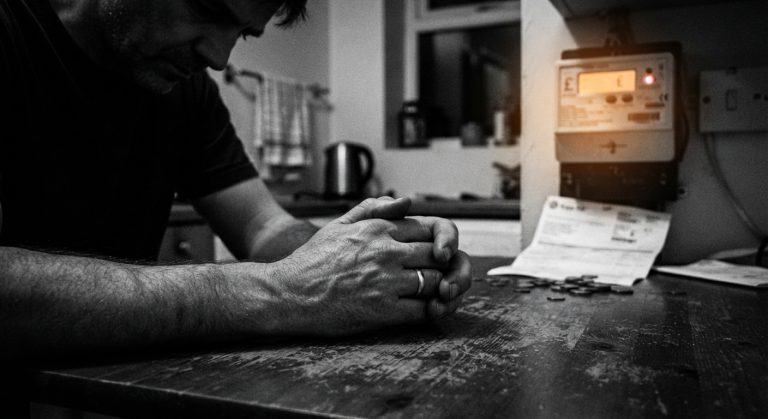
If you have zero pounds in the bank and your last twenty quid has to stretch until payday, listening to financial gurus lecture you about building a six-month emergency savings fund is enough to make you throw your phone at the wall.
When you are proper skint, talking about saving feels like someone standing outside a burning house telling you to check your smoke alarm batteries.
Don’t Listen to The Online Voices
The standard middle-class advice tells you to lock away thousands for a rainy day. TikTok to LinkedIn has many ‘financial content creators’ who wax lyrical about building six months salary as emergency savings. That advice assumes you have the spare cash just lying around, rather than an overdraft staring you in the face and a fridge that needs restocking whilst you’re hovering over Wagestream to take some of next month’s pay just to cover the essentials this month. It is completely out of touch with actual working-class in-work poverty.
Poverty and Work – It Shouldn’t Exist
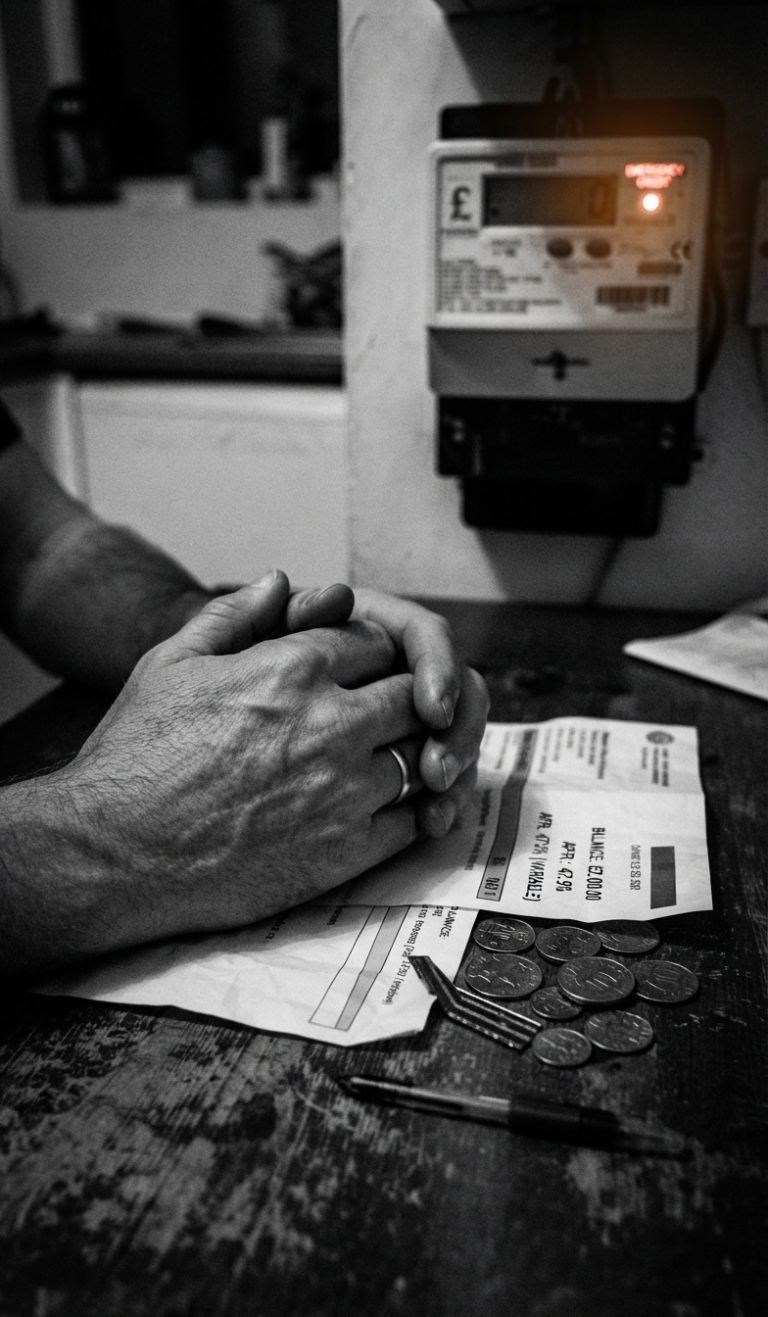
In-work poverty – sounds so wrong doesn’t it. You did the right things. You hold down a job, you’re a ‘productive member of society’ as the better offs like to call us, and yet thanks to banking crises, international wars, bond markets, and diplomatic tensions – costs rise and everything gets more expensive whilst wages stay stagnant in comparison.
When you are flat broke, saving is not about putting away a tidy monthly sum for a rainy day. It is about a brutal, microscopic triage of your own bank account.
A Simple Emergency Savings Plan: Explained
Here is what that actually looks like on the ground:
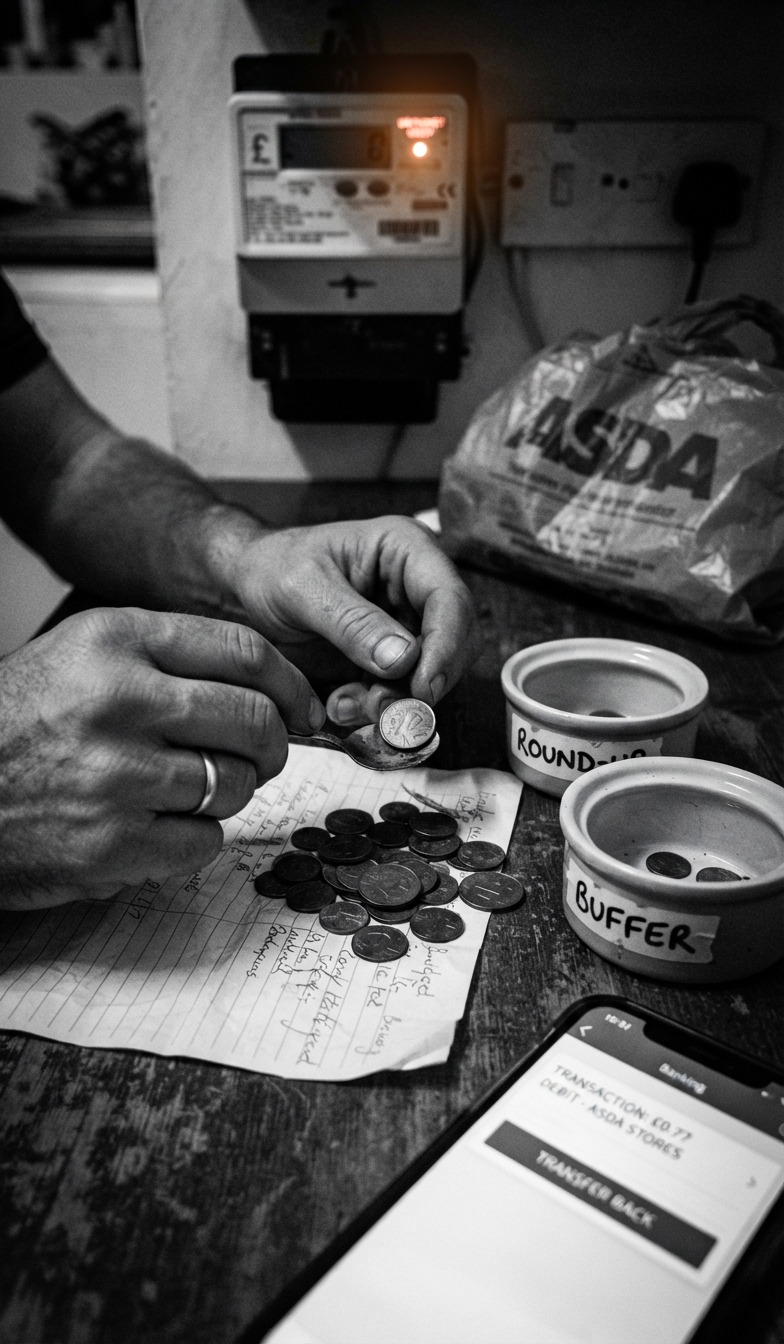
- The round-up rescue: moving seventy-seven pence back from your bank’s round-up savings pot because that automated transfer was taken from your last Asda shop, and right now those pennies are the difference between buying a bag of dry pasta and going without.
- The electric meter raid: digging down the back of the sofa for loose change or transferring three quid from a pot because the emergency credit on the pre-payment meter has started beeping, and you need to stop the kitchen going pitch black before the kids get home from school.
- The fuel gauge gamble: shaving two pounds out of a digital savings jar just to get enough diesel in the tank to make the shift at work, knowing full well that robbing tomorrow’s tiny buffer is the only way to survive the morning commute today.
You still need a buffer. If the cam belt goes on the car or the washing machine packs in, a single unexpected bill can shove you straight into the arms of doorstep lenders and high-interest credit cards.
That is why you treat emergency savings the same way you treat debt. You snowball it from the ground up, starting so small it feels ridiculous, until it actually adds up to something.
Research shows that people fail at saving not because they lack discipline, but because the target is too far away. When the mountain looks impossible, the brain gives up before it starts. You do not start with a grand. You start with a tenner.
Let’s Break The Plan Down
Here is how you build a real emergency savings buffer over five months without starving yourself.
- Month One: Save ten pounds. Just ten quid. Put it in a jar, stick it in a separate savings account, or hide it under the mattress. The amount does not matter nearly as much as breaking the habit of zero. Okay, “just” isn’t fair because we know it isn’t ‘just’ a tenner – it’s petrol money or bus fare. But starting from zero is the game here.
- Month Two: Save twenty-five pounds. By now, you have proven you can leave a tenner alone, and pushing it up slightly starts building the muscle memory of a buffer.
- Month Three: Save fifty pounds. This is where it gets uncomfortable, but a fifty-pound note sitting there means you can replace a broken tyre or pay a sudden unexpected bill without reaching for or even applying for credit.
- Month Four: Save seventy-five pounds. It will hurt, but alongside your debt snowballing it will help.
- Month Five: Save one hundred pounds. This is the end product of habitual savings. It builds the muscle memory that helps you not touch this money. Days when you wanted a takeaway or needed that kids polo shirt but you stubbornly held out until payday. This pot of savings will save you next time and the continuous drip of money will only help it grow.
The Result
By the time you hit month five, you have quietly stacked up two hundred and sixty pounds. It is not enough to buy a yacht (well maybe a Lego one), but it is enough to stop a minor household disaster from turning into an absolute catastrophe. You are saving up and banking peace of mind. Think how you felt the last time something expensive broke and you didn’t have access to savings – now think about that situation but you have a pot of money to replace that Washing Machine from Argos without borrowing.
You do not need a leather-bound journal or a multi-millionaire radio DJ telling you to cut out your lattes. You just need a system that respects how hard your money is to earn in the first place. Stop waiting until you are rich to start saving, and start building a wall against the chaos one small step at a time.